Shareholder Activism and AGM Disruption
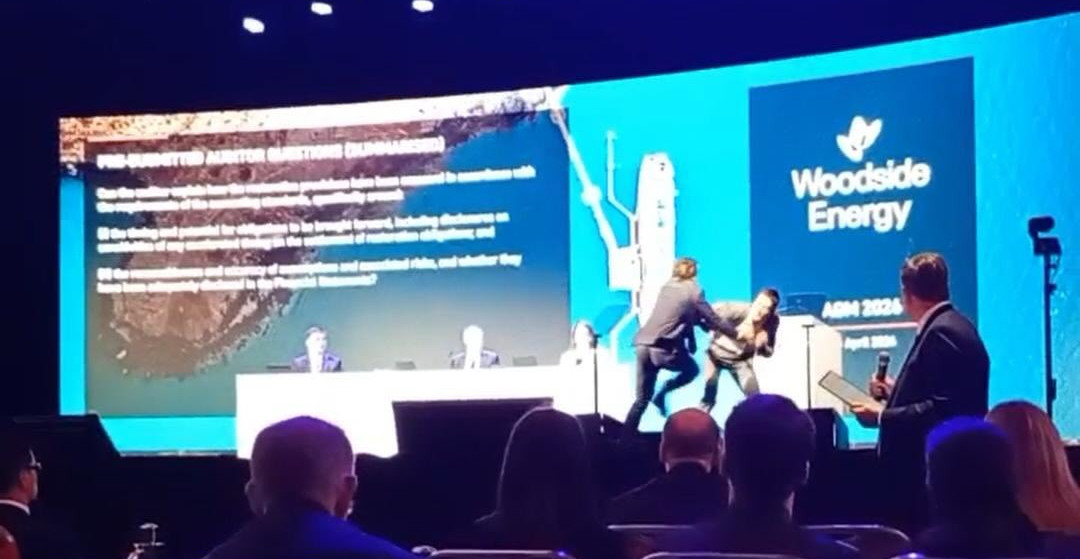
On Apr 23, 2026, four protesters from Disrupt Burrup Hub repeatedly interrupted Woodside Energy's annual general meeting (AGM) in Perth, Australia. One climbed onto the stage before security escorted the group out. Similar incidents have occurred at energy company and bank AGMs in Canada and abroad over the past decade. Opposition groups have found that a small number of shares, or a borrowed proxy, gets them into a room with a company's board and its largest investors.
How Groups Gain Access
Shareholders can attend an AGM, ask questions, vote, and appoint anyone as their proxy. At TD Bank's 2017 AGM in Toronto, two shareholders gave their votes to Leadnow representatives, who used the meeting to hand CEO Bharat MASRANI a petition with nearly 25,000 signatures calling on the bank to end its financial ties to Kinder Morgan.
Formal proposals are a second route. Under federal corporate regulations, a shareholder who has held at least 1% of a company's voting shares, or shares worth at least $2,000, for six months can generally submit a proposal for the meeting circular. At Enbridge's 2017 AGM in Calgary, a proposal on Indigenous rights and environmental risk brought by the Sisters of Charity (Halifax) and the Shareholder Association for Research and Education (SHARE) received about 30 percent of the vote. Most proposals like this fail, but each one puts the issue on the agenda and in the public record.
Disruption Inside the Room
Some groups attend to disrupt the meeting. At Shell's May 23, 2023 AGM in London, activists interrupted chair Andrew MACKENZIE with singing and shouting, and about 15 tried to reach the stage. The director of a Dutch investor association who attended said about 60 activists had been removed within the first hour. Fossil Free London promoted the protest. At Drax Group's Apr 2025 AGM in London, the board ended the meeting early after between 10 and 20 activists were forcibly removed, and the company described their conduct as threatening.
Canadian AGMs have generally been more orderly. At the Royal Bank of Canada (RBC) AGM in Toronto on Apr 11, 2024, Indigenous leaders and climate activists rallied outside and then entered the meeting with other shareholders. Activist shareholders and their proxies questioned CEO David MCKAY about the bank's fossil fuel financing, including Coastal GasLink, and several speakers had their microphones cut off under a 60-second time limit.
How Companies Have Responded
To mitigate this risk, some companies have moved their meetings online. In May 2022, Lloyd's of London urged members to attend its AGM virtually after its chair said the risk of disruption had increased. Drax announced that its board would not attend the 2026 AGM in person, citing attendee safety. Moving online lowers the risk of a physical confrontation, but campaigners often portray it as a way to avoid scrutiny.
What This Means for Organizations
An AGM is one of the few occasions when a company's executives and directors appear at a time and place published weeks in advance, and energy companies, as well as the lenders and insurers that finance them, are the most frequent targets. Security planning generally covers how attendees and proxy holders are checked at registration and the route between the stage and the exits. It also helps to agree beforehand on when the chair will pause or adjourn the meeting. Removals are often filmed and posted online, so the way security staff handle them can become a story of its own.
The Role of Digital Investigative Intelligence
Groups planning AGM action usually announce it in advance, since attendance and media coverage are the goals. Calls to buy single shares, requests for proxies, and recruitment posts tend to appear on social media and campaign websites in the weeks before a meeting. Monitoring that material can show how many people intend to attend and whether a group is planning a speaking campaign or a disruption. Posts and footage after the meeting show how the event is being described and whether the group plans to return the following year.
Conclusion
Shareholder activism gives opposition groups lawful access to a company's board, and most of that activity remains within meeting rules. The Woodside, Shell, and Drax meetings show how a small group can use that access to halt proceedings. Organizations that plan for the AGM as a security event, starting when activist proposals or recruitment posts first appear, are generally better placed to keep the meeting on track.
About 3Si Risk Strategies
3Si provides security and emergency management consulting, threat risk assessments, security planning, and public safety advisory services.
Learn more about our services or contact our team.