
Injunctions and Their Practical Limits
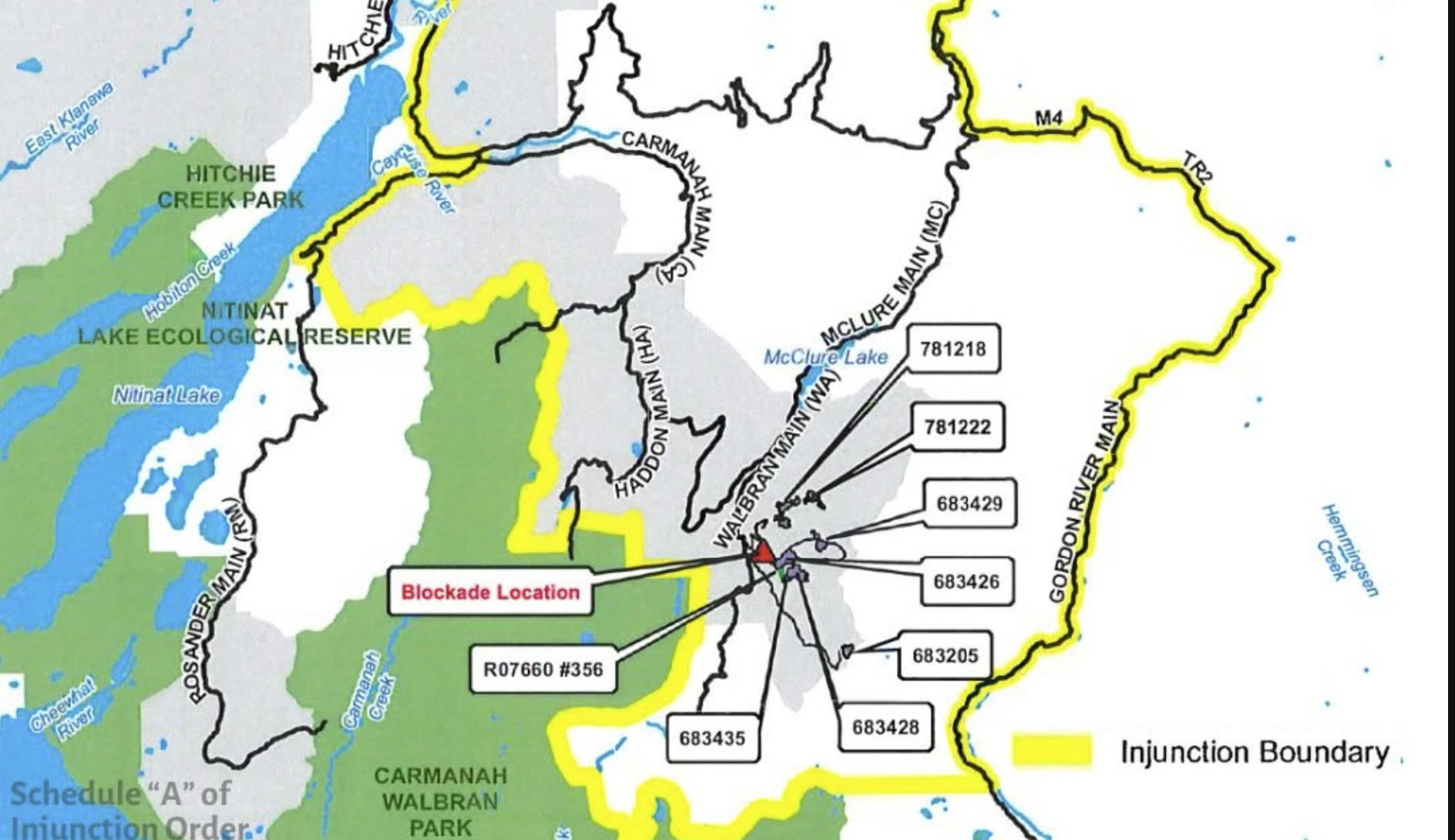
In late Aug 2026, the BC Supreme Court extended an injunction protecting Tsawak-qin Forestry's operations in the Walbran Valley on southern Vancouver Island to Jan 31, 2028. The order was first granted in Sep 2025 after a blockade cut off access to several cut blocks, and the extension ruling described protest tactics in the area as escalating. The case is a useful reminder that an injunction is often treated as the end of a dispute, when it is usually the start of a longer phase.
What an Injunction Does
An injunction is a civil court order that a company may apply for when protest activity interferes with lawful work. An order used against a blockade typically bars anyone with knowledge of it from obstructing access within a defined area, including people never named in the application, and usually includes a clause allowing police to arrest people who breach it. An injunction does not remove a blockade; the timing and scale of enforcement remain police decisions.
The Gap Between an Order and Enforcement
In the Walbran Valley, the injunction was granted on Sep 12, 2025, and the Royal Canadian Mounted Police (RCMP) began clearing the main camp on Nov 25, 2025, roughly ten weeks later. On the Coastal GasLink pipeline route, an interlocutory injunction was granted on Dec 31, 2019, and enforcement began on Feb 7, 2020. Police generally plan around available officers and the risk of confrontation at remote sites, so delays of several weeks in enforcement are common. During that period, work may stay stopped, and a blockade will often grow, since news of the order tends to draw new supporters.
How Groups Adjust
Groups rarely leave once an injunction is enforced. In the Walbran Valley, police found a second encampment elsewhere within the injunction area less than two weeks after clearing the first, and the extension ruling counted at least 14 arrests in 2025. The court also accepted uncontested evidence of equipment vandalism and several hundred spiked trees after enforcement, and on Aug 18, 2026, two fallers had their chainsaws destroyed after striking spikes. A monitoring group active in the area denied involvement. Not every case follows this path, but a pause after enforcement followed by a change in tactics is common enough to plan for.
Enforcement Becomes Part of the Record
Courts look at how an order is enforced, and that can affect whether it is renewed. In Sep 2021, BC Supreme Court Justice Douglas THOMPSON declined to extend the Fairy Creek injunction held by Teal Cedar Products, finding that police enforcement methods had seriously infringed civil liberties. By then, more than 1,000 people had been arrested. The British Columbia Court of Appeal restored the order weeks later, but the decision showed that a company has little control over the conduct that decides whether its injunction survives.
The issue can also come up at sentencing. In Feb 2025, Justice Michael TAMMEN found that RCMP officers breached the Canadian Charter of Rights and Freedoms rights of three people convicted of criminal contempt over the Nov 2021 Coastal GasLink blockade, and ruled their sentences would be reduced. Opposition groups continue to cite findings like these long after a case closes.
What This Means for Organizations
An injunction is generally time-limited, and renewing it requires fresh evidence that interference is continuing. In the Walbran extension, the court relied on evidence of ongoing vandalism and safety risks to workers, along with the company's claim of more than $3 million in lost revenue. Organizations that document incidents as they happen are in a stronger position when an order comes up for review. Planning should also allow for the contempt process, which can keep a dispute in the news for a year or more after a blockade is cleared.
The Role of Digital Investigative Intelligence
Groups blocked by an injunction generally organize publicly, posting calls for supporters and updates on arrests. Monitoring that material can show when a group plans to return or set up at a new location. Posts discussing the order also matter, since a person's awareness of an injunction is part of what makes a breach contempt of court. Captured with dates and links, this material supports the record a company needs when it applies to extend an order.
Conclusion
An injunction gives a company legal footing and gives police the authority to act, but it rarely resolves a dispute on its own. The order sets boundaries that opposition groups work around, and the enforcement record becomes material both sides draw on for years. Organizations tend to get the most value from an injunction when they treat the period after it is granted as its own phase, with monitoring that continues until the dispute has actually ended.