
Public Tracking Data and Operational Exposure
Earlier this year, we looked at how drones have made work sites easier to observe from above. This week's read looks at a related issue: how public tracking data makes the movement of vessels, aircraft, and shipments visible, and how that information can be used to plan disruption.
What Information Is Publicly Available
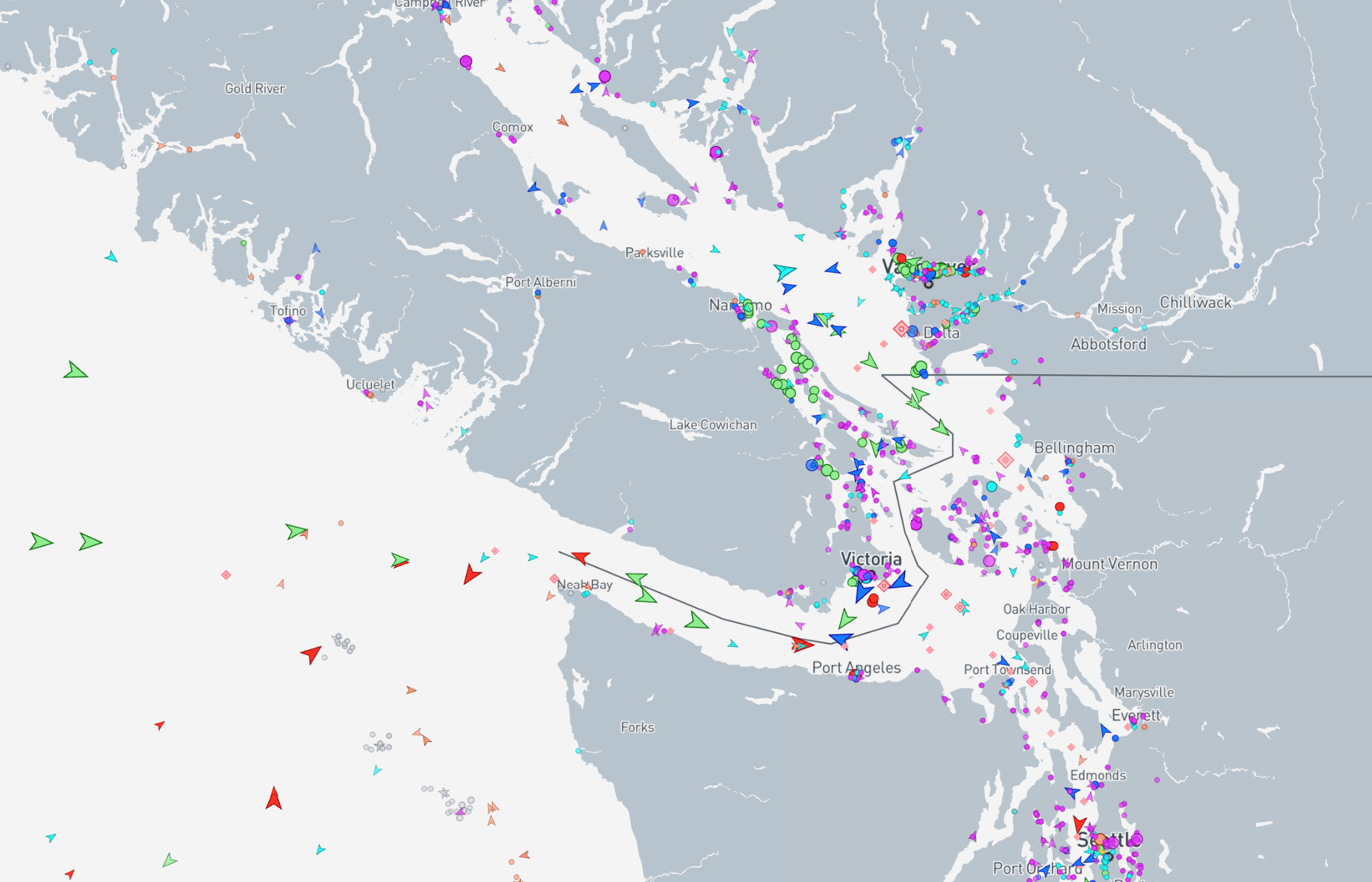
Most large commercial vessels are required to carry an Automatic Identification System (AIS) transponder, which broadcasts the ship's identity and position along with its stated destination. The system was designed to prevent collisions at sea, but its signals are picked up by shore-based receivers and satellites and published by services such as MarineTraffic. Many port authorities also post schedules of expected arrivals and departures.
Most aircraft broadcast their position in a similar way through Automatic Dependent Surveillance-Broadcast (ADS-B), and volunteer networks feed that data to public flight tracking websites. Because Transport Canada's Canadian Civil Aircraft Register is searchable online, a registration number seen on one of these websites can usually be matched to the aircraft's owner. Equipment shipments are less directly trackable, although oversized loads and large module moves often require permits and public traffic advisories that list routes and times.
Who Is Watching
The majority of people using this data do so as a hobby, following particular vessels and aircraft and sharing photographs and arrival times in online communities. Industry supporters have also used public tanker maps to argue that marine traffic is routine and safe.
However, opposition groups can use the same tools to learn when a vessel is due to arrive, where an organization's aircraft are flying, or which suppliers are connected to a project. This requires no special access or technical skill, and most tracking services allow users to set automatic alerts when a particular vessel or aircraft moves.
An Example from Burrard Inlet
In May 2016, a small group of kayak activists organized by Greenpeace and 350.org met the oil tanker Eser K in Burrard Inlet. The group timed their early morning encounter using publicly available vessel movement data from an app like MarineTraffic. The activists delayed the tanker's docking by about one hour before Port of Vancouver officials ordered them to disperse. The tracking services they used to locate and delay the vessel have only become more sophisticated and accessible since then.
How Tracking Data Supports Disruption
For opposition groups, the most practical use of tracking data is knowing when a vessel or equipment convoy will arrive. This allows a group to be in position at the right moment, and to plan around arrivals that are likely to draw public attention, such as a first delivery or a major component.
Tracking data can also help opponents identify who is involved in a project. The flight patterns of corporate aircraft can show which sites executives are visiting and when, which in some cases can indicate meetings or decisions before they are announced. Shipping information can show which carriers and suppliers are connected to a project, and smaller companies further down the supply chain are often easier to pressure than the project owner.
What Organizations Can Do
Most of this data cannot be removed from public view, and vessel AIS in particular is required for safety and regulatory reasons. Organizations can instead review what their own movements reveal, including whether vessel arrivals or aircraft use follow predictable patterns and whether public notices or contractor social media posts contain more detail than is needed. Security planning for high-profile deliveries or executive visits should assume that the timing may already be known.
The Role of Digital Investigative Intelligence
Monitoring can show when an organization's vessel or aircraft movements are being discussed online, and whether that attention is coming from hobbyist communities or from accounts connected to opposition groups. It can also identify when tracking data begins to appear in campaign material or event planning, which may indicate that a group is using the information to plan an action.
Conclusion
Public tracking data exists for safety and transparency, and most of the people using it have no interest in disrupting operations. However, the same information can show a nefarious actor when and where to be, and which companies are involved in a project. Organizations that understand what their own movements reveal can plan security around the deliveries and visits that are most likely to draw attention.